Local and emergency hygiene
Accurate hours, emergency paths, species, and maps. This is unglamorous and it is the difference between a call and a lost animal going to the place that picked up.
Veterinary practices · United Kingdom
Pet owners search at strange hours. They want a practice that is open, competent, and nearby — and they increasingly ask AI tools which vet to trust for a lame Labrador or a rabbit that has stopped eating. If your site is a generic group template, those answers will name someone else.
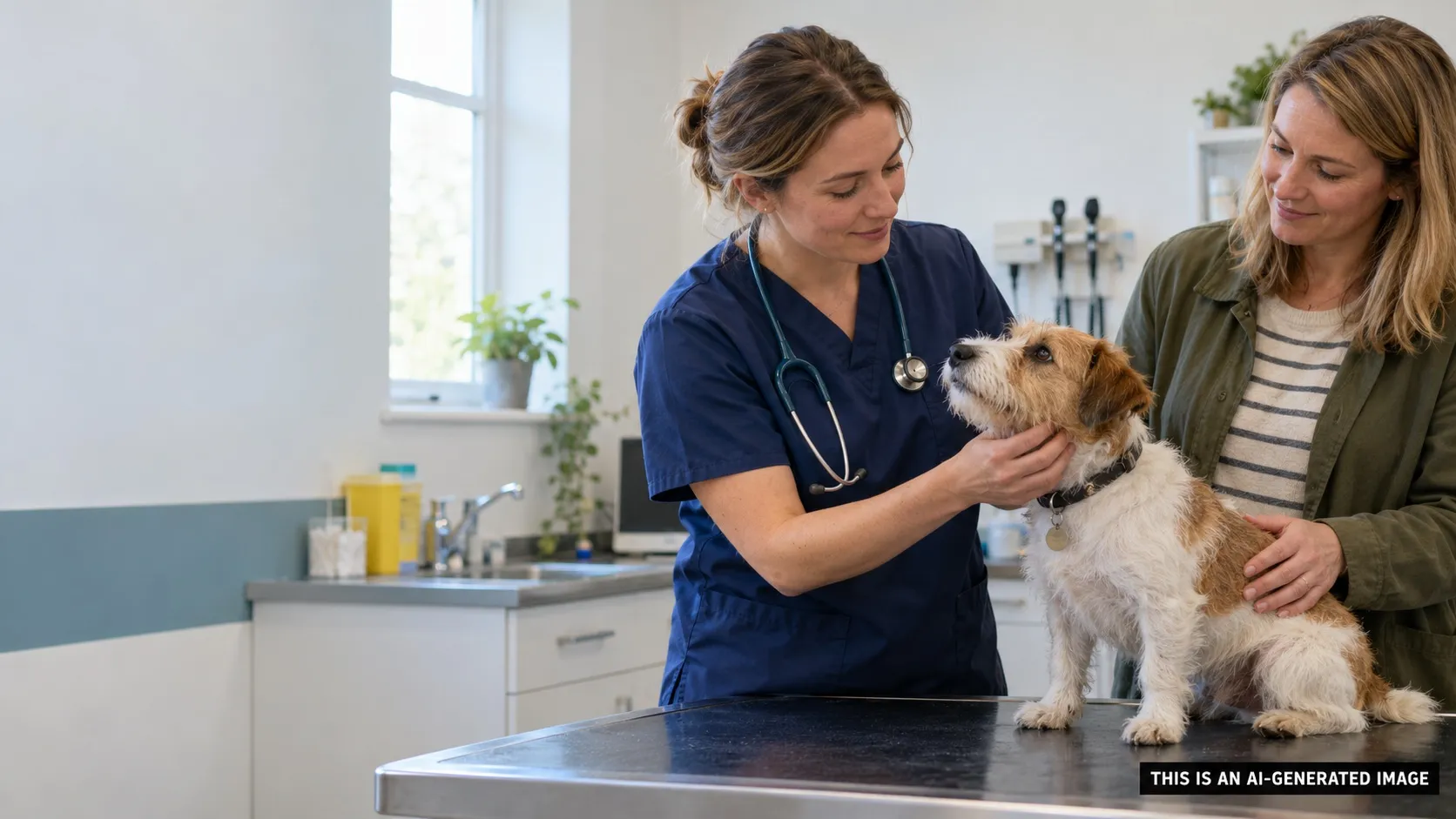
The useful facts — opening times, emergencies, species, parking, whether you see exotics, how repeat prescriptions work — are often buried under a brand film. Chains with thinner clinical cultures still win because their locations are structured and their profiles are complete.
Accurate hours, emergency paths, species, and maps. This is unglamorous and it is the difference between a call and a lost animal going to the place that picked up.
Vaccinations, dentistry, nurse clinics, orthopaedics, exotics — whatever is true. Written for owners, not for a pharmaceutical brochure.
Named vets, RCVS context, locations, services and FAQs as structured, crawlable pages. Citation is a side-effect of clarity.
New client, repeat prescription, emergency, bereavement — different tones, different forms. One “contact us” blob is how the wrong cases arrive in the wrong slot.
Independent practices and small groups usually start with an audit, then either a tightening of the current site or a rebuild if the group template cannot tell the truth about this branch.
Owners often see the practice on Google Maps before they open a service page, and often when they are worried. The Google Business Profile is the card they judge: category, name, address, phone, hours, photos, and whether anyone replies. Keep it true to the surgeries you have, the species you see, and the cover you actually provide. A tidy profile is not a promise of a place in the local pack.
Set the primary category to the closest true description Google offers, usually Veterinarian. Add a secondary category only when you genuinely provide that work, such as an emergency service you staff, and only when the label is a fair description. Do not choose a category that calls the practice a hospital unless you are accredited as a veterinary hospital, or you are going through that accreditation. Do not tick every animal label in the list. In the services field, name the work and the species you want bookings for, in the same words as the website.
Use the name the practice trades under. It should match the website. Do not add best, 24 hour, a species, or a town if that is not already the real name. Put the map pin on the entrance owners use. One profile per real surgery. Do not open a listing for a town where you have no premises, even if you see animals whose owners live there. The phone number and the opening hours should be the ones on the website and on the door. If you refer out of hours, do not leave the profile looking as if this surgery is open all night.
Use the exterior, the waiting room, and the consult rooms owners sit in. Photographs of animals need the owner's consent, and they should be animals you have actually seen. Team photographs need consent. A stock puppy, kitten, or rabbit from a photo library is not the practice, and it should not appear as if it were. Do not use a photograph of a species you do not treat as if you do.
Reply in the practice's own words, including when a review is unhappy. Do not add clinical detail about an animal, and do not confirm facts that are not already public. If the review is a complaint, keep the reply short and offer a private route. Do not offer a discount, a free consultation, or a gift for a review, and do not post a review as if you were the owner.
In the description, say which town the surgery is in, which species you see, and which work you want. If you mention the RCVS, state only a status that is true: registration, a Practice Standards Scheme level you currently hold, or Specialist and Advanced Practitioner titles for people who are on those lists. Do not call the practice a veterinary hospital unless that accreditation is current, or the practice is going through it. Mention 24-hour cover only when you provide it. Leave cure rates, and any claim to be the best practice in a town, out of the description.
Owners search with a problem, a species, and a place in mind. Referring veterinary surgeons search for a named procedure and a person. The site should answer both, clearly enough that an AI tool can cite you without guessing the fee, the species, or whether you are open. Use this as a blueprint, and drop a row you do not offer. A page that only swaps the town name is not a location strategy.
Scroll the table sideways to read each row.
| Page | What it is for | Thin version | Useful version |
|---|---|---|---|
| Practice home | Who you are, where the surgery is, and how to make contact. | Paw-print icons and a welcome that could belong to any practice. | The town, the species you see, the hours, the emergency path, and a phone number that works on a mobile. |
| One page per service you provide | Vaccinations, dentistry, nurse clinics, orthopaedics, and the other work you actually do. | A few paragraphs from a supplier brochure, with no sense of this practice. | Who it suits, the usual journey, which clinician, how fees are explained, and the questions owners ask before they call. No outcome dressed up as a promise. |
| Clinician | The person an owner, or a referring vet, searches for by name. | A headshot and a hobby. | The work they do, the species, the surgery they sit in, and RCVS registration. Specialist or Advanced Practitioner only while that person is on the list. No specialising in for anyone who is not. |
| Fees | A fair expectation before the phone call. | Contact us for prices, and nothing else. | Fee bands you can stand behind, or a plain account of what a consultation includes. A from-price only when a real visit can start there. |
| Emergencies and out of hours | Whether to come now, or to go somewhere else. | A line that says you care, and no number. | The hours you are open for urgent cases, the number to call, and the practice that covers the hours you do not staff. |
| This surgery | The real address owners drive to. | A doorway page for every nearby village, with the place name swapped. | Address, parking, hours, the phone number, and the species and services this surgery provides. |
| New clients | What the first visit involves. | A long form and no explanation. | How to register, what to bring, which species you see, and what to do if the animal needs to be seen today. |
If you want to be found for a service in the town where the surgery sits, say so on the service page and on the surgery page. A separate URL for every nearby village is the thin version of the same idea. We will not publish those. A written review of the live site is a paid audit from about £700, typically £700–£1,200.
When the current site cannot carry service pages, clinicians and surgeries, see AI-optimised veterinary websites.
The wider ladder, including optimisation and a new site, is on the services page.
When you want that written view, book an audit.
Advertising has to be accurate, truthful, and not of a character likely to bring the profession into disrepute. That is the line in the RCVS supporting guidance on advertising. The same honesty applies on the website and in the Google Business Profile description, including text an AI answer might quote. We will not soften a claim so that it ranks. This is our editorial line, not professional advice.
Veterinary surgeons who are not on the RCVS Specialist list should not use specialist or specialising in. They may say they have a particular interest in an area, that they are experienced in it, or that the practice is limited to it. If the courtesy title Dr is used, it should sit with veterinary surgeon or MRCVS, and it should not imply a medical degree or a PhD the person does not hold. A from-price is fair when a real visit can start there. A typical outcome is not something we will invent. We will not draft a medicinal claim for an unlicensed product. If a sentence needs a veterinary surgeon at the practice to stand behind it, it waits.
Longer, practical guidance on the same work. Start with the marketing plan, then use the service and website pages when you need implementation help.
Yes. Independents often need to look as clear as the groups without becoming them. Groups often need location pages that are not clones. We will not flatten a practice’s character to fit a keyword list.
Precisely. If you refer out of hours, the site must say so. Advertising an emergency service you do not staff is how owners — and regulators — lose patience.
Yes, and the work is different: referring vets as well as owners, named procedures, and a tone that does not undercut first-opinion colleagues. We will not write as if every searcher is a retail customer.
No. Anyone who does is selling fiction. We can usually improve completeness, relevance and conversion; the pack is competitive and maps data is noisy. An audit will set honest expectations for your town.
Next step
Audits from about £700. Websites about £2–3k. Retainers from about £750/month. If a rebuild is the better path, we will say so before anyone is out of pocket.