Updated AIoptimized
If you manage a residential or nursing home in the UK, marketing can feel like a second job you never asked for. Directories call. Agencies promise more enquiries. Social posts go out and nothing changes on the occupancy board.
Good care home marketing is quieter than that. It helps the right families find you, trust you, and book a show-round. Then your admissions process does the rest. This guide is written for operators who care about filled beds and honest reputation, not follower counts.
What “good” marketing looks like for a UK care home (occupancy + trust, not vanity)
Start with the outcomes that matter in a care home:
- Qualified enquiries (phone or form) from families who understand your care type
- Show-rounds that take place, not endless “just browsing” chats
- Admissions that match your registration (residential, nursing, dementia, respite)
- Steady trust signals: reviews, clear CQC presentation, consistent local presence
Vanity metrics still tempt people. Impressions, pageviews, and Facebook likes can rise while beds stay empty. Treat those as early indicators only. If they never turn into calls, visit requests, or admissions, they are noise.
A simple monthly question keeps everyone honest: how many new show-rounds did marketing create, and how many of those became admissions? If you cannot answer that, fix measurement before you buy more ads.
Trust sits beside occupancy. Families shortlist homes under pressure. They check CQC, photos, fees language, and how quickly someone answers. A campaign that fills a bed with a mismatched placement, or with messaging that oversells, costs more than an empty room. Ethical marketing protects occupancy over time.
Who you are really marketing to (adult children, crisis vs planned moves, self-fund vs LA)
Most residential and nursing home buyers are not the resident. Adult children, spouses, and sometimes professional advocates do the searching, comparing, and calling. They often work full time. They may be exhausted. They compare three to five homes on Carehome.co.uk, Google Maps, and your website in the same evening.
Two journeys dominate:
Crisis moves. Hospital discharge, sudden decline, carer breakdown. Speed, clarity, and phone availability matter more than polished brand stories. They need care type, location, availability language, and a human they can reach today.
Planned moves. Gradual decline, carer burnout over months, or a family finally agreeing it is time. These families research more deeply: day-to-day life, staffing, activities, fees, dementia support, visiting. Content depth and consistent local presence help you stay on the shortlist while they take their time.
Funding changes the conversation:
- Self-fund families often want fee ranges early, what is included, and how reviews of fees work. Hiding everything behind “call for prices” increases drop-off.
- Local authority funded placements still involve family influence, but the pathway may include social workers and brokers. Your site and Google Business Profile should still explain care types clearly; your enquiry process should capture referral source so you know what is working.
Write for the person holding the phone at 9pm, not for a trade brochure committee. Plain English beats clever slogans.

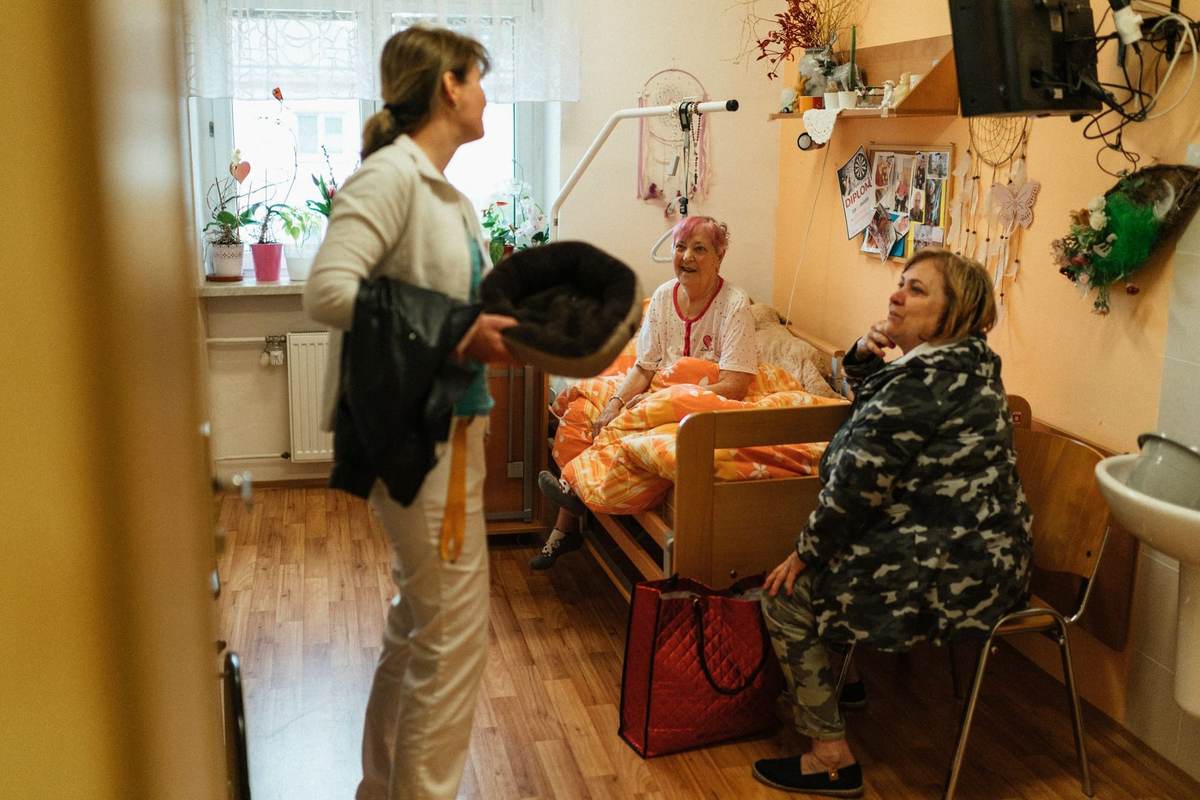
Illustrative photo, not a client home. Photo: Andrea Piacquadio on Pexels.
The occupancy funnel: visibility → trust → enquiry → show-round → admission
Think of marketing as a short funnel, not a pile of tactics:
- Visibility: families find you on Google Maps, search, directories, or referral.
- Trust: they believe you look safe, suitable, and honest (CQC, photos, reviews, clarity).
- Enquiry: they call or submit a form.
- Show-round: they visit (or join a structured virtual tour when needed).
- Admission: assessment, funding, and placement succeed.
Most homes over-invest in step 1 (another leaflet, another boost) and under-invest in steps 2 to 4. A home that ranks well but answers enquiries in three days loses to a quieter competitor that answers in an hour and runs a calm show-round.
Map every tactic to a funnel stage. If a tactic cannot influence visibility, trust, enquiry quality, or show-round conversion, question why you are doing it.
How to market empty care-home beds without sounding desperate
An empty bed creates pressure, but urgency inside the business should not become panic in the marketing. Families can feel the difference between a useful availability message and a home trying to fill any room with any placement.
Start with the bed itself. Record the care type, room features, funding routes you can accept, assessment lead time, and the resident for whom the placement would genuinely work. Then make that information consistent across the admissions team, website, directories, and Google Business Profile. Do not publish a room number, resident information, or a false deadline.
A practical four-week plan is:
- Week one: fix the facts. Confirm care type, availability wording, fee explanation, contact routes, and response ownership.
- Week two: improve the landing journey. Link local search visitors to the relevant care-type page and make show-round booking obvious on mobile.
- Week three: contact the real referral network. Update discharge contacts, social workers, local professionals, and families who asked to hear about suitable availability.
- Week four: measure the bottleneck. Separate visibility, qualified enquiries, completed show-rounds, assessments, and admissions. More traffic will not repair unanswered calls or unsuitable placements.
Use paid search only when the care-type page and admissions response are ready. A tightly targeted campaign for a real nursing or respite vacancy can support occupancy; sending every click to a generic homepage usually creates mismatched enquiries. The durable foundation remains accurate local visibility and clear SEO for care homes and nursing homes.
Strategy pillar 1: Local visibility (Google Business Profile, Maps, and directories)
When someone searches “care home near me” or “[town] nursing home”, Google’s local pack and Maps often decide the first shortlist. Your Google Business Profile (often shortened to GBP in marketing) is the front door for that behaviour.
Priorities for local visibility:
- Claim and verify the Business Profile for each physical home
- Keep Name, Address, Phone identical across the Business Profile, website footer, and major directories
- Choose categories that match residential or nursing care, not homecare agency labels
- Keep hours, photos, and posts current (visiting information, open days, seasonal life in the home)
- Reply to reviews with care and accuracy
Directories still matter for discovery and consistency. Carehome.co.uk and similar listings should match your NAP and care types. Duplicate or conflicting addresses confuse Google and families.
Local visibility is not the whole strategy, but without it many paid and content efforts start from behind. The Google Business Profile guide covers setup in depth; treat this pillar as non-negotiable hygiene.
Strategy pillar 2: Website and SEO that answer family questions
Your website’s job is not to look expensive. It is to answer the questions that stop a family calling: what care you provide, who it is for, what life feels like, how fees work at a high level, how to book a show-round, and how CQC rates you.
Strong operator sites usually include:
- Separate paths for residential, nursing, dementia, and respite where relevant
- Named people and real photography (with consent)
- Clear enquiry routes on mobile (tap-to-call and a short form)
- Honest CQC presentation with a link to the report
- Service-area and location pages that match how people search for your town or borough
Search engines reward the same clarity. Useful pages about your home, location, and care types help you appear for the searches families actually type. That durable channel is what we mean by SEO for care homes: structure and content that serve families first, then rank.
If you want pages that stay clear for both people and answer engines (structured FAQs, plain definitions of care types), an AI-optimised care home website approach helps you avoid brochure fluff and thin template copy. The product decision can wait; the principle should not: write answers families can use.

Illustrative photo, not a client home. Photo: Matheus Bertelli on Pexels.
Strategy pillar 3: Paid and social without sounding desperate
Paid search and social can fill gaps when occupancy dips or a new home launches. They can also make a home look frantic if the creative screams “beds available now” every week.
Use paid media carefully:
- Prefer geo-targeted search for care-type + town queries when organic coverage is weak
- Send ads to relevant landing pages (nursing, dementia), not only the homepage
- Cap spend and review enquiry quality weekly, not only click volume
- On social, show daily life, staff introductions, and community moments more often than vacancy announcements
- Avoid stock images of smiling “residents” who are clearly models
Facebook and Instagram still reach adult children. They work better as trust builders and event amplifiers (open days, coffee mornings) than as hard vacancy sales channels. If you run vacancy posts, pair them with substance: care type, location, how to enquire, and what happens next.
Print, door drops, and outdoor still appear in some strategies. They can support brand recognition in a tight catchment. Measure them with unique phone numbers or URLs if you can; otherwise treat them as awareness only and keep budget modest.
Strategy pillar 4: PR, community, and referral networks (ethical)
Referrals from GPs, social workers, hospitals, solicitors, and existing families remain powerful. Marketing’s job is to make those referrals easy and credible:
- Keep professional packs or a simple referral page up to date (care types, admissions contact, response expectations)
- Host genuine community events you would be proud of even if no one moved in
- Share useful local content (carer support, dementia-friendly tips) without turning every post into a pitch
- Build relationships with discharge teams where appropriate, within your organisation’s policies
PR and trade coverage can help reputation, especially after a strong CQC inspection or a meaningful community project. Avoid buying vanity awards that families never heard of. Families trust inspection evidence and peer reviews more than logos on a homepage carousel.
Never pressure residents or families into marketing appearances. Consent, dignity, and safeguarding come first. That is not only ethics; it is brand protection.
Enquiry UX: the marketing tactic most homes under-invest in
You can win the click and still lose the admission. Enquiry experience is marketing. What families check on the page before they call is set out in what families expect from a care home website.
Practical standards many homes can adopt:
- Answer speed: aim to return calls and form submissions the same working day; set an out-of-hours message that sets expectations and offers a callback window
- Form length: name, phone, email, care need, preferred contact time. Extra fields can wait until assessment
- Phone vs form: keep both. Crisis families call. Planners often prefer forms after hours
- Qualification without interrogation: ask enough to route residential vs nursing vs dementia, and note self-fund vs LA if they offer it, without sounding like a credit check
- Show-round booking: confirm date, what to bring, parking, who they will meet, and how long it takes
- Log everything: source (Business Profile, Google organic, directory, referral), care type, outcome
A “qualified enquiry” for marketing purposes is someone who needs a care type you provide, in a catchment you serve, and who is open to a visit or formal assessment. Counting every spam form as a lead hides the real problem.
Train whoever answers the phone. Warmth and clarity convert better than a perfect website. Marketing and “sales” meet here: marketing creates the conversation; enquiry handling turns it into a show-round.
Manager’s monthly marketing checklist (copy-paste)
Use this as a one-page ops list. Tick what you can; assign the rest.
Weekly
- Reply to new Google and directory reviews
- Post one Business Profile update (photo, event, or visiting note)
- Check enquiry log: unanswered items older than 24 to 48 hours
- Confirm vacancy / availability wording on site and key directories still honest
Monthly
- Screenshot Business Profile Insights (calls, direction requests, website clicks)
- Review website enquiry and call outcomes vs show-rounds booked
- Spot-check NAP consistency on top three directories
- Update one trust asset (team photo, activity gallery, fees “from” note if changed)
- Scan CQC page link and rating display still accurate
- Review any paid campaigns for enquiry quality, not only spend
Quarterly
- Refresh service pages for residential / nursing / dementia clarity
- Audit photography consent and remove outdated or non-consented images
- Meet admissions and marketing owners: what messaging caused mismatched tours?
Print it. Stick it near the manager’s desk. Consistency beats occasional big campaigns.
What to measure (and what to ignore)
Here is a simple occupancy-focused scorecard you can run each month:
| Metric | Why it matters | Watch for |
|---|---|---|
| Calls and form enquiries (by source) | Shows which channels create contact | Spam and wrong care-type enquiries |
| Time to first response | Predicts show-round conversion | Weekend and evening gaps |
| Show-rounds booked / completed | Mid-funnel health | High enquiries, low visits |
| Admissions from marketing-influenced journeys | True ROI | Attribution arguments; keep it simple |
| Business Profile actions (calls, directions, site clicks) | Local demand signal | Flat actions despite posting |
| Review volume and reply rate | Trust for shortlisting | Unanswered negatives |
| Organic landing pages that earn enquiries | SEO usefulness | Traffic with zero contact |
Ignore or demote: raw social followers, video view vanity, boost post likes, and “brand awareness” slides with no enquiry link. Those can support trust, but they are not occupancy KPIs.
Some UK call-tracking studies report that a large share of care-related calls can originate from Google’s local presence. Treat that as a prompt to take GBP seriously, not as a fixed percentage for your home. Your Insights screenshots are more useful than industry folklore.
When to bring in specialist help
Stay in-house when you need weekly posting discipline, review replies, enquiry logging, and honest content updates. Those are operational habits.
Bring in specialist help when:
- Technical SEO, site structure, or multi-location page strategy is beyond your team
- The Business Profile is suspended, duplicated, or fighting incorrect categories
- You are launching a home or repositioning after a difficult inspection period
- Paid media is spending without qualified show-rounds
- You want a clear audit of visibility gaps before hiring a bigger retainer
A good partner should talk about occupancy, enquiry quality, and ethics as readily as rankings. If the pitch is only “more traffic” or “more posts”, keep looking.
If you want a calm second opinion on where you are visible and where enquiries leak, you can book a digital visibility audit. Audits from about £700, typically £700–£1,200. We look at local presence, site clarity, and enquiry paths with care-home operators in mind.
Frequently asked questions
What marketing works best for care homes in the UK?
The mix that usually works is local visibility (Google Business Profile and consistent listings), a clear website that answers family questions, steady review reputation, and fast enquiry handling. Paid ads and social help in bursts. Referral relationships with professionals still matter. Rank tactics by show-rounds and admissions, not by how modern they sound.
How long does SEO take to improve care home enquiries?
Meaningful organic gains often take a few months of consistent work on local pages, service clarity, and technical basics. Homes in competitive towns may need longer. You should see earlier signs in impressions and Map actions before enquiry volume jumps. SEO is a durable channel, not a weekend switch.
Should care homes advertise vacancies on Google Ads?
Sometimes, especially for a launch, a new unit, or a temporary occupancy dip. Keep geo targeting tight, land people on the right care-type page, and watch enquiry quality weekly. Constant vacancy ads can hurt brand feel. Pair paid search with strong organic and Business Profile foundations so you are not renting all your visibility.
How do we market ethically when beds are empty?
Tell the truth about availability without panic language. Keep photos and claims accurate. Do not invent urgency. Strengthen response times, show-round quality, and clarity on care types. Empty beds are a business problem; misleading families creates a worse one.
What’s the difference between care home marketing and sales?
Marketing creates visibility and trust so the right people enquire. Sales (or admissions) turns those enquiries into assessments and placements through conversation, tours, and process. In small homes the same person may do both. The distinction still helps: fix the website and Google Business Profile for marketing; fix scripts, follow-up, and tour experience for admissions.
How many Google reviews do families expect before calling?
There is no magic number. Families compare tone, recency, and how management replies as much as star averages. A modest number of recent, specific reviews with thoughtful responses often beats a large pile of old one-liners. Earn reviews ethically after positive experiences; never incentivise ratings.
Related guides
These are the closest next reads.
- How to set up Google Business Profile for a UK care home: categories, photos, reviews, and a weekly checklist for the Maps profile.
- What families expect from a care home website: the pages and enquiry paths that turn a visit into a show-round.
- SEO for care homes: search pages for the care types and catchments you genuinely serve.
- An AI-optimised website for care homes: a site built around clear answers and straightforward enquiries.